

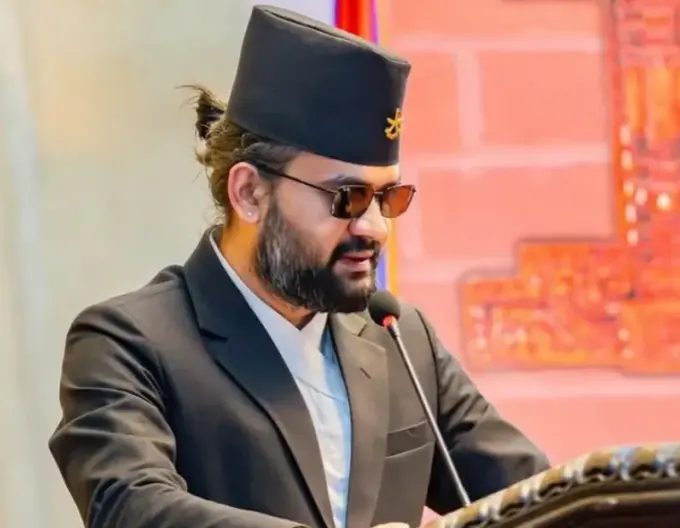
Nepal Foreign Affairs (KATHMANDU, 30 April 2026) – Nepal is planning to appoint ambassadors through open competition for its vacant ambassadorial positions. At present, 17 ambassadorial posts remain vacant, creating both urgency and opportunity for reform. Minister for Foreign Affairs, Shishir Khanal has consulted with Prime Minister Balendra Shah, who has agreed in principle to move forward with this approach. Khanal has also held internal discussions within the Ministry of Foreign Affairs to explore the framework, criteria, and implementation of such a system. According to the MoFA sources, Minister Khanal has given directives to issue a vacancy notice for those positions.
This marks a significant departure from Nepal’s traditional practice, where ambassadorial appointments have largely been shared between career diplomats and political nominees. While this hybrid system exists in many countries, in Nepal it has often drawn criticism for favoring political loyalty over professional competence. The proposal for open competition seeks to address this gap—but it also introduces new institutional and constitutional questions.
At a time when Nepal faces growing geopolitical sensitivity—caught amid the heightened tussle of major powers—this reform cannot be seen as a routine administrative change. It goes to the heart of how Nepal represents itself in an increasingly complex world.
Role & Qualification
Ambassadors are the highest representatives of a nation abroad. They are entrusted not only with maintaining diplomatic relations but also with negotiating agreements, promoting economic interests, and projecting the country’s image. For Nepal, a country situated between powerful neighbors and exposed to global strategic competition, this role carries even greater weight.
Nepal’s geopolitical vulnerability has deepened as rivalry intensifies among actors such as India, China and the United States. In such a context, ambassadors must act with precision, balance, and foresight. A weak or misaligned diplomatic presence can have consequences far beyond protocol.
The qualifications of an ambassador, therefore, must go beyond academic degrees. A strong educational background in international relations, economics, or law is important. Practical experience—whether in diplomacy, governance, or international engagement—is equally critical. Ambassadors must possess negotiation skills, strategic thinking, and the ability to interpret complex geopolitical signals.
Equally vital are personal attributes: communication skills, cultural sensitivity, and emotional intelligence. Diplomacy often unfolds in informal settings as much as formal negotiations. The ability to build trust and manage relationships is indispensable.
Above all, ambassadors must represent the nation, not partisan interests. This has been a recurring concern in Nepal, where political appointments have sometimes raised questions about neutrality and professionalism. Any reform—whether through open competition or otherwise—must ensure that national interest remains the guiding principle.
Open vs Hearing
The concept of open competition implies a transparent and merit-based process where qualified individuals can apply and be evaluated against clear criteria. It is designed to widen the pool of candidates and reduce the dominance of political patronage. In theory, it brings fairness, inclusivity, and professionalism into ambassadorial selection.
However, Nepal’s Constitution requires parliamentary hearings for ambassadorial nominees. This creates a potential tension. If candidates are selected through a competitive process, can they still be rejected on political grounds during hearings? Does this not undermine the merit-based system?
The two processes may appear contradictory, but they can be complementary if properly aligned. Open competition can serve as the first filter, ensuring that only capable candidates are shortlisted. Parliamentary hearings can then provide democratic oversight, examining integrity, vision, and national commitment.
The real challenge lies in practice. If parliamentary hearings become overly politicized, they risk negating the value of open competition. Conversely, if open competition lacks transparency or rigor, it may fail to deliver genuine merit.
Comparative practices offer perspective. In India, ambassadors are largely drawn from the Indian Foreign Service, reflecting a career-based system. Political appointments are limited, and there is no open competition as currently proposed in Nepal.
In the United States, the President nominates ambassadors, and the Senate confirms them through hearings. The system blends political authority with institutional oversight, though it also faces criticism when political appointees lack diplomatic experience.
Nepal’s approach is thus relatively unique—attempting to integrate open competition with parliamentary scrutiny. Its success will depend on how well these mechanisms are harmonized.
Way Forward
Nepal’s move toward open competition is both timely and complex. With 17 ambassadorial positions vacant, the need for credible and capable representation is immediate. But reform must be carefully designed to avoid creating new problems while solving old ones.
First, the criteria for selection must be clear and objective. Merit should be defined not only in terms of academic qualifications but also experience, skills, and proven ability. The process must be transparent to gain public trust.
Second, the scope of open competition should be balanced. Strategic postings—such as in New Delhi, Beijing, and Washington—may require seasoned diplomats with deep experience. A mixed system, combining career diplomats and competitively selected professionals, may be more practical.
Third, parliamentary hearings must be guided by clear standards. Their role should be to ensure accountability, not to serve as arenas of political bargaining. Without reform in this area, even the best-designed competitive system could be undermined.
Finally, Nepal must keep its broader geopolitical reality in focus. In an era of intensified great power competition, diplomacy is no longer routine—it is strategic. Ambassadors must be equipped to navigate competing pressures while safeguarding Nepal’s sovereignty and interests.
Open competition offers an opportunity to reset Nepal’s diplomatic practice. But the ultimate goal is not the process itself; it is the outcome. Nepal needs ambassadors who are competent, credible, and committed—individuals who can carry the nation’s voice with confidence in an increasingly contested global arena.