

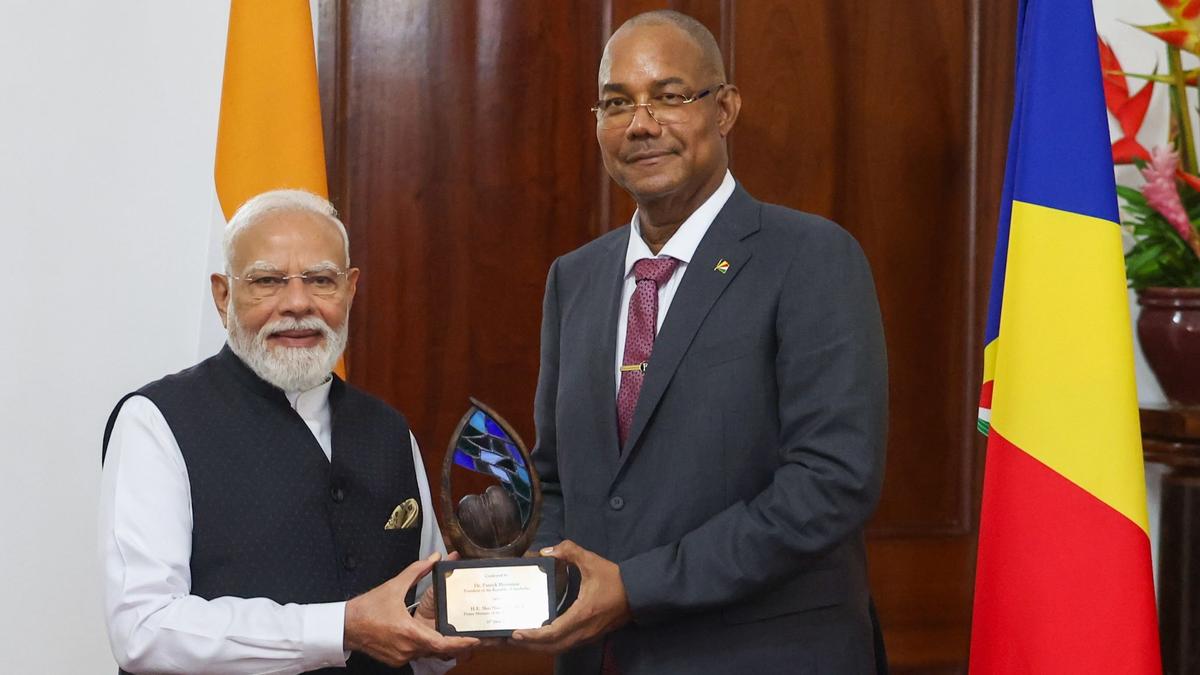
KATHMANDU- Prime Minister Narendra Modi has transformed India’s foreign policy from a largely reactive approach into one that is increasingly proactive, strategic, and globally visible. Over the past decade, India has expanded its diplomatic engagement across continents, strengthened partnerships with major powers, revitalized ties with the Global South, and enhanced its influence in the Indo-Pacific. The recent state visit to Seychelles offers another compelling example of how India’s diplomacy under Modi combines strategic vision, development cooperation, cultural affinity, and political trust.
The significance of the Seychelles visit extends well beyond the bilateral relationship. Although Seychelles is a small island nation, it occupies a strategically vital location in the western Indian Ocean. As global competition increasingly shifts toward maritime domains, India has recognized that partnerships with island states are indispensable for safeguarding sea lanes, promoting the blue economy, addressing climate challenges, and ensuring regional stability. Modi’s visit demonstrated that in contemporary diplomacy, influence is determined not merely by geography but by the ability to build enduring partnerships based on mutual respect and shared interests.
The visit produced tangible outcomes. India and Seychelles signed nine agreements covering areas such as legal cooperation, digital connectivity, development assistance, and security. India also extended a 1,250 crore Line of Credit for priority development projects, reinforcing its reputation as a reliable development partner rather than merely a strategic actor. The introduction of India’s Unified Payments Interface (UPI) into Seychelles further illustrates New Delhi’s growing emphasis on digital diplomacy and technology-driven cooperation.
One of the defining characteristics of Modi’s diplomacy is the seamless integration of strategic, economic, developmental, and cultural dimensions. During his address to the National Assembly of Seychelles—the first ever by an Indian Prime Minister—Modi described the Indian Ocean as an “Ocean of Opportunity” and emphasized that the ocean connects nations rather than divides them. Such messaging reflects India’s aspiration to promote an inclusive and cooperative maritime order instead of exclusive spheres of influence.
This diplomatic success also reflects the professionalism and strategic clarity of India’s Ministry of External Affairs under Subrahmanyam Jaishankar. Jaishankar has helped shape a foreign policy that is pragmatic, interest-based, and adaptive to an increasingly multipolar world. Under his stewardship, India’s diplomacy has become more agile in balancing relations with major powers while simultaneously strengthening engagement with developing countries, island nations, and regional organizations. His emphasis on strategic autonomy has enabled India to maintain productive relations across competing geopolitical blocs without compromising its national interests.
The Modi-Jaishankar partnership has consequently elevated India’s international profile. Their diplomacy has combined decisive political leadership with professional execution, allowing India to project itself as a trusted security provider, a dependable development partner, and an influential voice of the Global South. Whether through humanitarian assistance, infrastructure financing, digital public goods, or climate cooperation, India increasingly presents itself as a nation willing to contribute practical solutions to regional and global challenges.
The Seychelles visit also reinforced India’s long-standing doctrine of maritime cooperation. By expanding security collaboration while simultaneously investing in sustainable development, renewable energy, and climate resilience, New Delhi demonstrated that hard power and soft power are not mutually exclusive but complementary instruments of statecraft. This balanced approach strengthens India’s credibility among smaller states that seek partnerships without compromising their sovereignty. (The Times of India)
For Nepal, several important lessons emerge from India’s contemporary diplomacy. Although Nepal’s geopolitical environment differs from that of Seychelles, the underlying principles remain relevant. Consistent high-level political engagement, timely implementation of commitments, effective economic diplomacy, and clear strategic communication significantly enhance a country’s international standing. As Nepal navigates an increasingly competitive regional environment between its two giant neighbours, it can benefit from pursuing a proactive, balanced, and interest-driven foreign policy. India’s recent diplomatic outreach demonstrates that sustained political leadership, backed by institutional capacity and strategic vision, can substantially expand a nation’s influence. For Nepal, strengthening diplomatic professionalism while advancing national interests through constructive engagement with all partners remains an important pathway for enhancing its own role in regional and global affairs.