

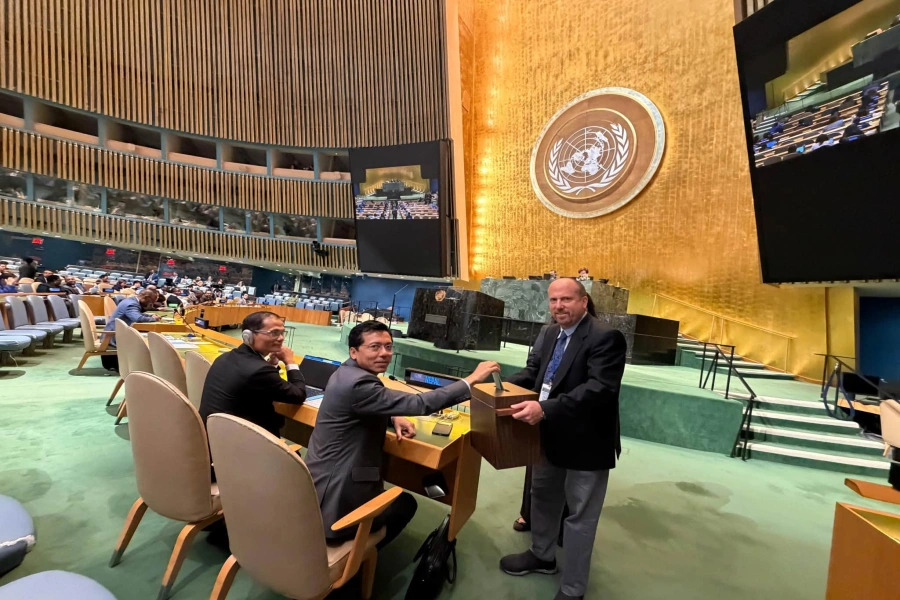
KATHMANDU – Nepal has been elected to the United Nations Human Rights Council for the 2027–2029 term, receiving 173 of the 180 votes cast in the UN General Assembly, Nepal’s Permanent Mission to the UN in New York said.
Nepal secured the highest number of votes among the countries elected in its group, according to the mission, which welcomed the outcome as a reflection of international confidence in the country’s commitment to multilateralism and human rights.
In a statement, Nepal thanked UN member states for their support, reaffirming its commitment to international law and a rules-based international order centred on the United Nations.
The government also congratulated the other 14 countries elected to the 47-member council for the same term: Brazil, Burundi, the Dominican Republic, Germany, Ghana, Ireland, Japan, Jordan, Kuwait, Moldova, Nigeria, Ukraine, Uruguay and Zambia.
Nepal said it would work with UN member states and international partners to protect human dignity, promote inclusion and social justice, and advance equitable development, guided by the principle of leaving no one behind.
Nepal previously served two consecutive terms on the council from 2018 to 2023. Its latest election provides another opportunity to contribute to global discussions and initiatives aimed at promoting and protecting human rights.
Established in 2006 and headquartered in Geneva, the Human Rights Council comprises 47 member states elected by the UN General Assembly for three-year terms. Seats are allocated among regional groups, and members are elected through a secret ballot.
The council monitors human rights situations worldwide, conducts the Universal Periodic Review of all UN member states and addresses alleged human rights violations. It also appoints independent experts, known as special rapporteurs, to investigate specific country situations and thematic human rights issues.
Nepal’s new membership brings both diplomatic opportunities and responsibilities. The country will be expected to contribute to international efforts to uphold fundamental freedoms, strengthen accountability and ensure the universal application of human rights standards.
Its performance during the three-year term will also draw attention to its domestic human rights record, particularly its efforts to promote inclusion, social justice and the protection of fundamental freedoms.