

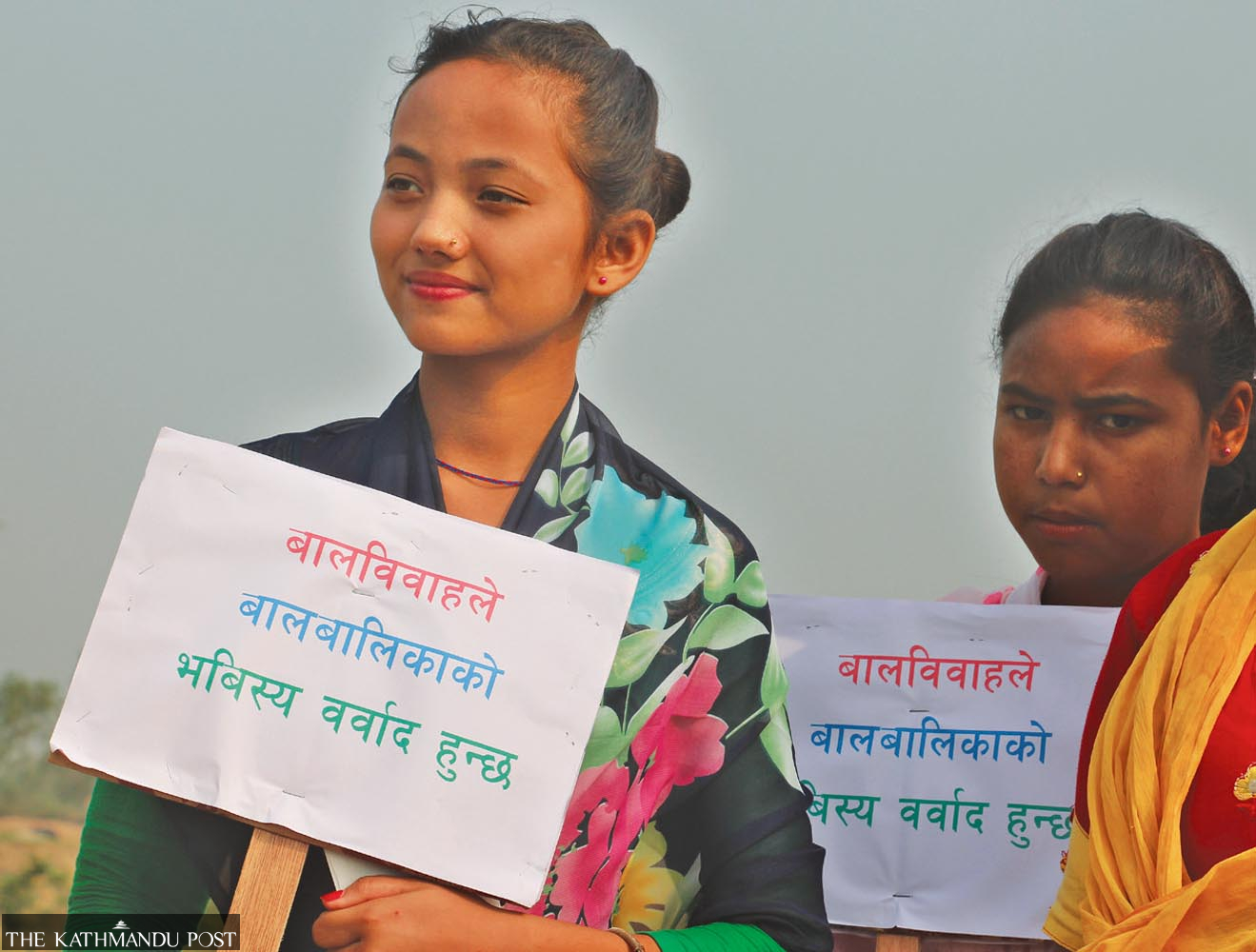
KATHMANDU – Nepal has made notable progress in reducing child marriage over the past decade, but the country is not on track to eliminate the harmful practice by 2030, according to a new UNICEF report.
The advocacy brief, Ending Child Marriage in Nepal: A Decade of Data and a Call to Action, reveals that the proportion of women aged 20-24 who were married before turning 18 declined from 37 percent in 2014 to 28 percent in 2024-25. The percentage of women married before age 15 also dropped by half, from 10 percent to 5 percent during the same period.
The report was released ahead of the International Day of the Girl Child, observed annually on October 11. This year’s global theme, “End Child Marriage and Invest in Girls’ Rights,” calls for accelerated action to protect girls’ rights and ensure they have opportunities to pursue education and shape their futures.
Drawing on Nepal Multiple Indicator Cluster Surveys conducted in 2014, 2019 and 2024–25, the brief highlights several positive developments. More girls are remaining in school, while the median age at first marriage has risen from 17 in 2001 to 19.6 in 2024-25.
However, progress remains uneven, with poverty emerging as the strongest predictor of child marriage. Girls from the poorest households are now 4.4 times more likely to marry before age 18 than those from the wealthiest families. While child marriage rates have changed little among the poorest households in recent years, wealthier families have made considerably faster progress.
The report also warns that climate-related disasters, including recent floods in Nepal, can heighten the risk of child marriage and other forms of violence against children. Disruptions to education, declining household incomes and increased protection risks can push vulnerable families towards harmful coping strategies.
“Change is possible, and Nepal has made important progress in reducing child marriage,” said Alice Akunga, UNICEF Representative to Nepal. However, she cautioned that the pace of progress remains insufficient and that the benefits have not reached all girls equally, particularly those from poor and marginalized communities.
Akunga described ending child marriage as a crucial investment in Nepal’s future, noting that it would enable girls to continue their education, improve their health and contribute more fully to their communities and national development.
The brief also emphasizes the importance of education in preventing child marriage. Girls who complete secondary education face a significantly lower risk of marrying before age 18. However, poverty and other barriers often force the most vulnerable girls to leave school prematurely, increasing their exposure to early marriage.
Swarnima Kadel, UNICEF Nepal Youth Advocate for Adolescent Girls’ Empowerment, stressed that every girl should have the opportunity to complete her education, pursue her ambitions and make decisions about her future. She called on families, communities and leaders to encourage girls to remain in school and realize their potential.
To accelerate progress, UNICEF has called for targeted support for girls from the poorest households, measures to keep girls in school throughout adolescence, stronger child protection systems, efforts to challenge harmful social norms and greater investment in effective programmes that empower girls and support families.
With only four years remaining to achieve Sustainable Development Goal Target 5.3, which calls for ending child marriage and other harmful practices by 2030, UNICEF has urged the government, development partners, civil society, communities and young people to strengthen their collective efforts to ensure that every girl can grow up free from child marriage and fulfil her potential.