

KATHMANDU – China is making great headway in new industrialisation, urbanisation, and agricultural modernisation despite significant global challenges and the post-pandemic crisis. Its modernisation is often regarded as one of the best examples in the world, not just in Asia.
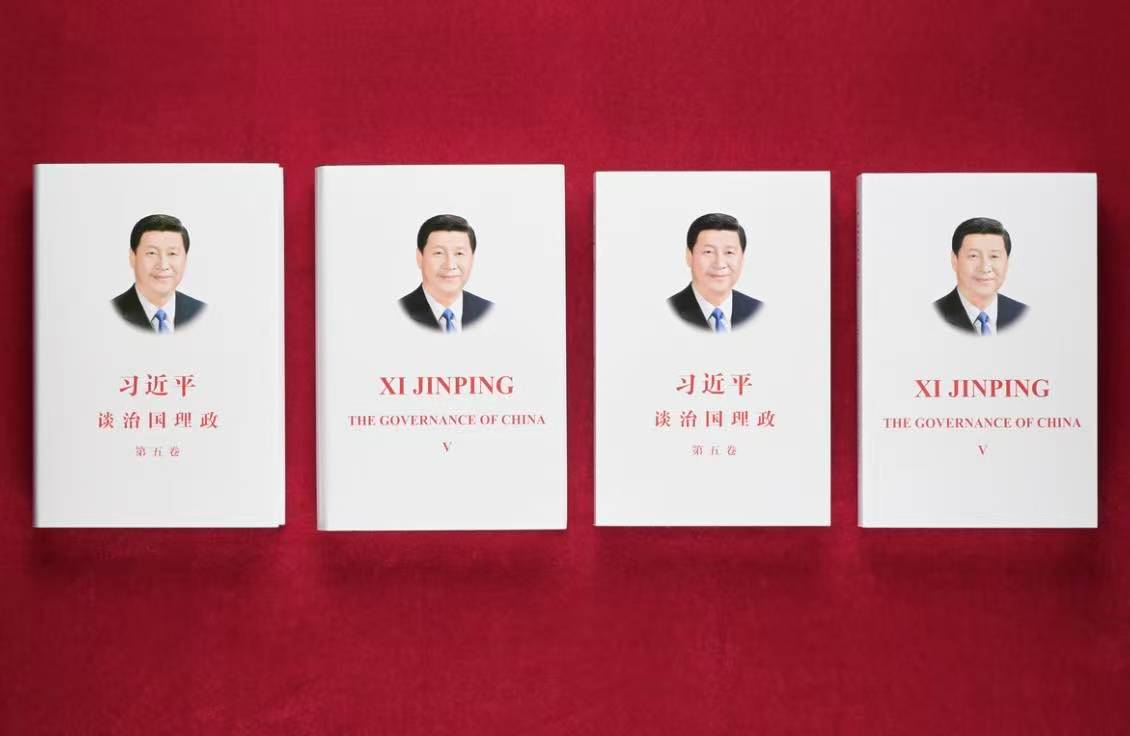
The fifth volume of Xi Jinping: The Governance of China contains Chinese President Xi Jinping’s speeches and written guidelines, offering a comprehensive understanding of the Chinese concept of modernisation.
Under the section “Modernisation and Shared Prosperity”, President Xi highlights the new concept of modern development and the idea of shared prosperity in the present era through six different topics.
In the chapter “Join Forces on the Path Towards Modernisation”, he mentions that the global economic recovery remains sluggish, the development gap is widening, the ecological environment is deteriorating, and the Cold War mentality is lingering. Humanity’s modernisation process, he says, has reached a crossroads in history. This is rightly said, as the world today faces unprecedented challenges, not only from climate change but also from economic difficulties, armed conflicts, and technological rivalry, among others. Amid such challenges, keeping people at the centre becomes crucial.
“Modernisation is not only about indicators and statistics on paper but more about delivering a happy and stable life for the people. With a focus on the people’s aspirations for a better life and further progress of civilisation, political parties should strive to achieve material abundance, political integrity, cultural-ethical enrichment, social stability, and pleasant living environments so that modernisation will better address the concerns and meet the diversified needs of the people,” he mentions in the chapter.
It is the need of the hour to work together to reform and develop the global governance system and make the international order more just and equitable. I am particularly impressed by the statement that humanity lives in a community with a shared future, where we rise and fall together. This spirit calls for unity and partnership through which a sustainable future can be built.
As Xi mentions, for any country to achieve modernisation, it should pursue common development through solidarity and cooperation and follow the principles of joint contribution, shared benefits, and win-win outcomes. This principle definitely contributes to the idea of shared prosperity.
Under the chapter “Promote Universally Beneficial and Inclusive Globalisation”, Xi highlights innovation as the driving force for stronger growth of the world economy. Therefore, advances in science and technology should benefit all humanity.
“First, we should take innovation as the driving force for stronger growth of the world economy. Second, we should keep pace with the times and reform the system of global economic governance. Third, we should always take a people-centred approach and seek to address imbalances in development,” the statement reads. In recent years, developed countries have made significant advances in science and technology, while developing and least-developed countries are still in need of support in terms of capacity building. Countries like Nepal require support through the global flow of knowledge and technology.
I agree that when it comes to development, it should mean the common development of all countries. High-quality development is related to innovation, coordination, green, open, and shared development, rather than the traditional factors of land, labour, or capital. There is a need to act in the spirit of openness and connectivity. The principle of “plan together, build together, and benefit together” could be highly beneficial for countries with lower capacity.
In another chapter entitled “Build a Just World of Common Development”, Xi stresses that to build such a world, we need to channel more resources into fields such as trade, investment, and development cooperation and strengthen development institutions.
In a thought-provoking statement, the Chinese President says that there should be more bridges of cooperation and fewer “small yards, high fences” so that more developing countries can achieve modernisation and greater prosperity.
While we talk about modernisation, there is a need for an open, inclusive, and non-discriminatory environment for international economic cooperation so that less-developed countries can benefit. I agree with the statement that “we should promote a universally beneficial and inclusive economic globalisation, energise sustainable development with new technologies, new industries and new business forms, and support developing countries in better integrating into digital, smart, and green development.”
Multilateralism has a major role to play in creating such a just world of common development.
China has been able to achieve a new development dynamic, which is the result of the policies advocated by President Xi. What we can understand is that in everything China does, it always places the people front and centre, and it solemnly declares that “not a single poor region or person should be left behind.” If we, too, could work in such a way, development would not be far away. For this, there is a need for targeted policies tailored to each sector while keeping people at the centre.
In other chapters as well, he explains similar ideas to jointly achieve peace, innovation, green development, justice, and closer people-to-people exchanges around the world. The integrated approach to modernisation and development presented by Xi Jinping in his writings is relevant to developing nations like Nepal.
As he says, “A single flower does not make spring. China wants to see a hundred flowers in full blossom and will go hand in hand with fellow developing countries toward modernisation.” It is time for many other countries to rise with the support of developed economies like China. For Nepal, there is a new opportunity to bloom, and for that, the assistance of its neighbouring country is significant.
Prosperity and stability would not be possible in a world where the rich become richer while the poor become poorer. I am confident that, as President Xi advocates, together we can make significant strides on the path to modernisation towards the goal of building a community with a shared future for mankind.
(Bhattarai is a former Minister and Deputy General Secretary of CPN-UML.)