

An uncertain foreign policy, an unpredictable leadership and the importance of constructive Nepal-India relationship
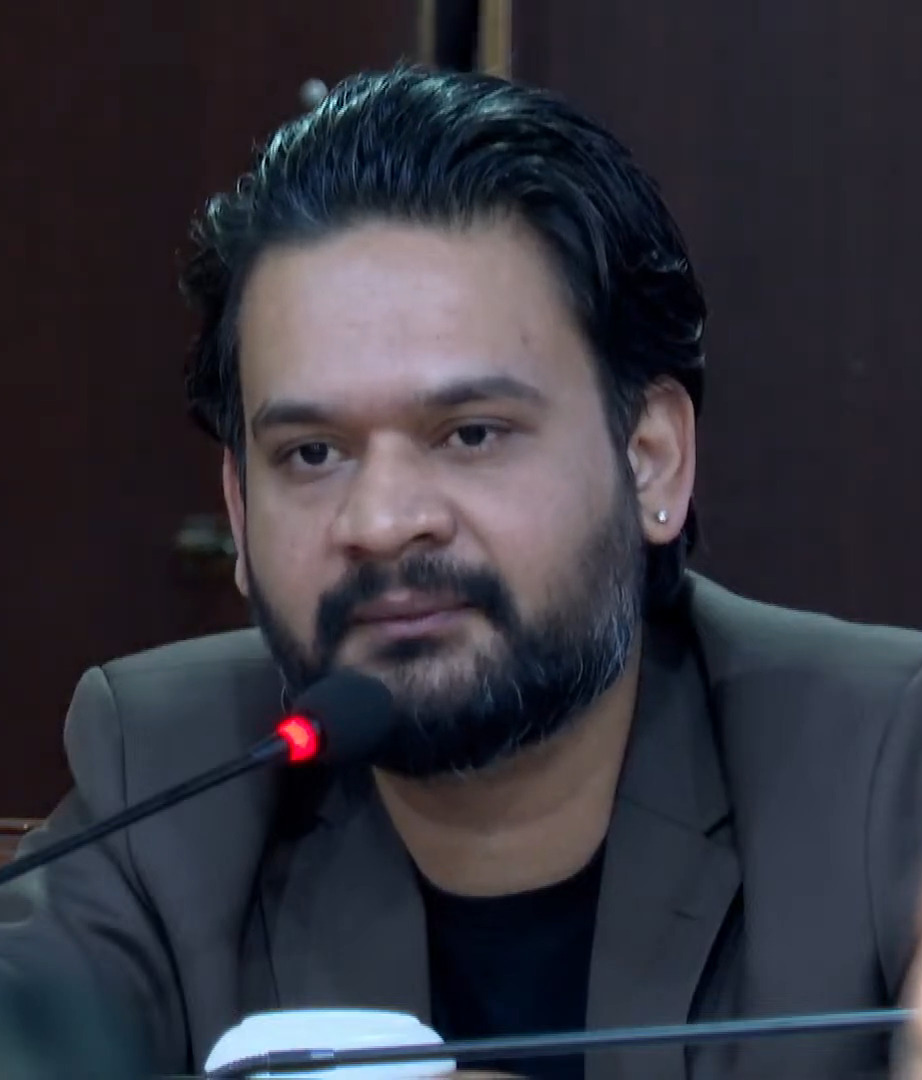
KATHMANDU: Prime Minister Balendra Shah is scheduled to visit India from November 22 for a four-day official visit. This will be his first bilateral foreign visit since assuming office on March 27, 2026. Although he has attended the United Nations General Assembly (UNGA), he did not hold bilateral meetings on the sidelines, unlike previous Nepali prime ministers, who traditionally used the international gathering to engage with world leaders.
After months of diplomatic uncertainty and political speculation, Shah is finally preparing for his India visit. Although the two governments have yet to make a simultaneous formal announcement, diplomatic preparations have gathered momentum, and the visit is expected to take place from November 22 to 25, with bilateral talks between Shah and Indian Prime Minister Narendra Modi scheduled for November 23.
The visit is significant not merely as Shah’s first bilateral engagement abroad but also because it comes amid questions about the foreign policy orientation of his government. So far, the Prime Minister has not clearly articulated his foreign policy priorities or presented a coherent approach towards Nepal’s immediate neighbours. Against this background, the India visit offers an important opportunity to strengthen bilateral confidence. At the same time, the circumstances leading to the visit expose a fundamental weakness in the foreign policy approach of Nepal’s new political leadership: the absence of a clearly articulated and consistent neighbourhood policy.
Political Hesitation
When Balendra Shah assumed office, Indian Prime Minister Narendra Modi congratulated him and extended an invitation to visit India. It was a positive diplomatic gesture from New Delhi, reflecting India’s willingness to establish an early working relationship with Nepal’s new political leadership.
However, Shah did not immediately seize the opportunity to establish high-level engagement. Instead, he initially indicated that he would avoid foreign visits during the first year of his premiership, prioritising domestic governance and administrative reforms. Although focusing on domestic responsibilities is understandable, such a position created uncertainty about his government’s approach to international engagement, particularly when the invitation had come from Nepal’s closest neighbour.
The uncertainty became more visible when Indian Foreign Secretary Vikram Misri’s proposed visit to Kathmandu in May was postponed. Misri was expected to visit Nepal on May 11–12 to meet the new political leadership and facilitate preparations for Shah’s India visit. However, a meeting with the Prime Minister could not be arranged. The episode generated considerable diplomatic discussion because high-level consultations are a normal and essential part of preparing bilateral engagements.
Subsequently, the government’s position appeared to change. On September 20, The Indian Express reported that Kathmandu and New Delhi were working towards arranging Shah’s visit during the second half of November. Nepal’s Foreign Minister Shishir Khanal also indicated on September 30 that both countries wanted the visit to be fruitful and result-oriented.
Preparations gathered momentum in October. On October 15, The Kathmandu Post reported that officials from both countries had started preparations, with the third or fourth week of November being considered. On October 29, the newspaper reported that Misri would visit Kathmandu on November 4 to prepare the ground for the Prime Minister’s visit. India’s newly appointed Ambassador to Nepal, Sudhakar Dalela, arrived in Kathmandu on November 3.
Misri’s two-day visit on November 4–5 became a turning point. He held discussions with Foreign Secretary Amrit Bahadur Rai and met Nepali ministers responsible for finance, foreign affairs, energy and infrastructure. Most importantly, he called on Prime Minister Shah on November 5 and conveyed Modi’s greetings. The two sides discussed bilateral cooperation and possible outcomes of the forthcoming visit. Shah also expressed appreciation for India’s prompt humanitarian assistance following the devastating August floods in Nepal.
Following these consultations, the visit was scheduled for November 22–25, with delegation-level talks between Shah and Modi expected on November 23. Thus, a visit that initially faced considerable uncertainty has gradually taken shape through sustained diplomatic engagement.
Political Stunts and Unpredictability
Shah’s political relationship with India has been characterised by contradictory signals, nationalist rhetoric and an unconventional style of political communication. During his tenure as Mayor of Kathmandu Metropolitan City, he displayed the map of Greater Nepal, commonly associated with the Akhand Nepal narrative, in his office. He also ordered a ban on the screening of Indian films in Kathmandu cinemas in June 2023, following a controversy over the film Adipurush and its reference to Sita’s birthplace. These decisions projected a strong nationalist image, but they also brought municipal politics into the sensitive domain of Nepal-India relations.
His conduct after becoming Prime Minister raised further questions. Despite receiving an invitation from Modi, he initially declined to undertake foreign visits during his first year in office. The subsequent postponement of Misri’s proposed May visit, particularly the failure to arrange a meeting with the Prime Minister, created an avoidable diplomatic misunderstanding. The later decision to proceed with the India visit represented a significant shift in his position.
More seriously, Shah’s remarks in Parliament concerning Nepal’s territorial claims against India generated another diplomatic controversy. The issues of Limpiyadhura, Lipulekh and Kalapani are sensitive matters of national sovereignty and territorial integrity. Nepal has consistently maintained that these territories belong to it, based on historical documents and cartographic evidence.
However, Shah’s reference to British involvement in examining the historical boundary question generated questions about whether his government was considering international mediation. India has traditionally maintained that boundary issues should be resolved bilaterally. Nepal, too, has a longstanding diplomatic position of resolving the dispute through dialogue between the two countries. The Prime Minister’s subsequent clarification that he was referring to historical documents rather than seeking British mediation did not entirely remove the uncertainty created by his original remarks.
A country’s foreign policy cannot be conducted through social-media-style declarations or occasional political gestures. It requires institutional coordination, strategic consistency and diplomatic predictability. A Prime Minister’s words carry the weight of the state, and their consequences extend well beyond domestic political audiences.
Shah’s unpredictable political style may have contributed to his popularity among sections of the electorate. However, international relations operate under different rules. Political stunts that generate domestic attention can create unnecessary diplomatic complications, particularly when they concern neighbouring countries with which Nepal shares deep historical, cultural, economic and people-to-people ties.
The central question, therefore, is whether Shah can move beyond his unconventional political style and demonstrate the diplomatic maturity expected of a head of government.
An Opportunity
India has every reason to maintain a constructive, friendly and mutually beneficial relationship with Nepal. Shah’s visit should be viewed as an opportunity to consolidate the longstanding friendship between the two countries and advance cooperation in areas of shared interest. Several important issues deserve the attention of both Prime Ministers.
First, post-flood reconstruction should receive priority. Nepal suffered enormous human and economic losses from the August 26 disaster in the Rasuwa-Bhotekoshi corridor. India was among the first countries to respond with humanitarian assistance, relief materials and rescue support. Nepal has proposed an assistance package of approximately US$2 billion for reconstruction and rehabilitation. The visit should provide an opportunity to discuss this proposal and identify practical areas of cooperation.
Second, energy cooperation offers enormous potential. Nepal’s hydropower resources and India’s expanding energy market complement each other. Both countries should accelerate cross-border transmission infrastructure, electricity trade and major hydropower projects, including the Pancheshwar Multipurpose Project and Lower Arun. Long-term energy cooperation can transform Nepal’s economy while contributing to India’s regional energy security.
Third, connectivity and infrastructure deserve serious attention. Nepal needs additional air-entry routes to make its international airports in Bhairahawa and Pokhara commercially viable. Cross-border railways, roads, petroleum pipelines and integrated check posts can further strengthen economic integration. The proposed railway service between Ayodhya and Janakpur is another positive development in people-to-people connectivity.
Fourth, both countries should continue constructive dialogue on outstanding boundary issues. Nepal’s concerns regarding Limpiyadhura, Lipulekh and Kalapani deserve serious and respectful consideration. India and Nepal should strengthen existing bilateral mechanisms and pursue a mutually acceptable resolution based on historical evidence, diplomatic dialogue and mutual understanding. Such sensitive issues should be handled through established diplomatic channels rather than political rhetoric.
Fifth, cooperation in education, tourism, agriculture, technology, health and investment should be expanded. India’s economic transformation and technological advancement offer significant opportunities for Nepal. A stronger economic partnership can generate employment, improve infrastructure and support Nepal’s ambition to become a prosperous economy.
The visit must also be understood within the broader geopolitical context. Nepal shares its borders with India and China, two major powers with growing regional and global influence. Both countries are essential to Nepal’s development and strategic interests. Nepal should neither create unnecessary suspicion in New Delhi nor allow its engagement with India to be interpreted as distancing itself from Beijing. A balanced neighbourhood policy, founded on sovereign equality and mutual respect, remains essential to Nepal’s national interest.
For India, Shah’s visit is also an opportunity to understand the priorities and political thinking of Nepal’s new leadership. New Delhi has demonstrated considerable diplomatic patience by keeping its invitation open and continuing engagement despite earlier uncertainties. This constructive approach deserves appreciation. A stable and prosperous Nepal is unquestionably in India’s long-term interest, just as a friendly and economically strong India is vital for Nepal.
The most important challenge, however, is political trust. Shah must demonstrate that his government is capable of maintaining a predictable, consistent and constructive relationship with India. He cannot afford to allow domestic political calculations to dictate Nepal’s foreign policy. Similarly, India should continue engaging Nepal with warmth, sensitivity and respect for its sovereignty and national interests.
Ultimately, the success of the visit will depend on whether both countries can translate political goodwill into tangible outcomes. For Shah, it is an opportunity to move beyond earlier political stunts and demonstrate the maturity, consistency and diplomatic responsibility expected of a Prime Minister. India, as Nepal’s closest neighbour and an important development partner, should remain a central pillar of Nepal’s neighbourhood policy.
Shah’s India visit should therefore mark a transition from political uncertainty to diplomatic responsibility. It is time for Nepal to replace episodic political gestures with a coherent foreign policy and build its relationship with India on the foundations of trust, friendship, mutual respect and shared prosperity.